


The Jurgens Group team recently came together for our annual conference and what an incredible experience it was!
This year, we placed a strong focus on personal growth and development, taking time to invest in ourselves so we can continue delivering our best. A definite highlight was an inspiring session from Joni Peddie, who brought fresh perspective, energy, and plenty of thought-provoking insights.
We left feeling motivated, recharged, and excited for the year ahead!
A Message from Mark Jurgens
As we enter the second quarter of 2026, I hope your Easter holidays were enjoyable. We often seem to be chasing the next “holiday break”, so we need to be mindful about slowing down and appreciating these calmer moments.
As you are aware, geopolitical developments in the gulf and conflict involving Israel, the U.S. and Iran, have contributed to increased market volatility. While these events can be unsettling, it is important to remember that periods of uncertainty are normal and an expected part of investing.
Market fluctuations often reflect short term actions to news and sentiment rather than longer term fundamentals.
Despite this short-term discomfort, I must remind you that our portfolios are intentionally built to be resilient across a wide range of scenarios. They include holdings designed to help protect against sudden market shocks. Exposure to inflation linked bonds, for example, have held up well given the upward pressure on prices.
Morningstar’s valuation driven investment process remains central to how we manage client portfolios. Focus on identifying attractively priced opportunities based on in-house research and avoiding overvalued areas of the market.
To illustrate this, the Jurgens Balanced fund has, as of 31st March 2026, given a return of -1.4% year to date but have still given a return of 18% for full year. Far better than most would have believed.
From our perspective, the greatest risk during times like these is not the volatility itself, but how investors respond to it.
Making sudden or emotionally driven changes to portfolios can often lead to unintended consequences and may undermine long-term investment outcomes.
Your portfolio was carefully constructed based on your individual risk profile, investment horizon and financial goals. These factors remain the most important drivers of your strategy, regardless of short-term market movements.
We continue to monitor developments closely and will make adjustments where necessary and appropriate. However, in most cases, maintaining a disciplined and consistent approach is the best course of action.
I sign off in the hope that our next newsletter will not be regarding another ongoing war. Keep healthy and warm during the upcoming cooler months.
Mark
Your Truth, My Truth, and the Market: How Relativism Shapes Investor Behaviour from Alan Botha
In modern culture the phrase “your truth is your truth” has become commonplace. It reflects a broader philosophical idea known as relativism or the belief that perspectives, values, and interpretations are subjective and shaped by personal experience. While this mindset may encourage tolerance in social debate, it can become dangerous when applied to investing and money management.
Markets are not governed by personal truths. They are governed by mathematics, probabilities, and economic realities. Yet investors frequently behave as if their personal beliefs about money, risk, and opportunity are facts rather than perceptions. The gap between personal truth and financial reality is where many investors unintentionally sabotage their own long-term wealth.
The Stories Investors Tell Themselves
Every investor carries a narrative about money. These narratives are shaped by upbringing, past successes or failures, media commentary, and peer influence. Over time they solidify into beliefs that feel objectively true.
One investor may believe that property is always the safest investment because it worked for their parents. Another might believe that markets are “rigged” after experiencing a painful loss during a downturn. Others convince themselves that they have a natural ability to pick winning shares because of a few early successes.
These beliefs form what feels like personal truth.
The problem is that markets do not validate personal narratives. When investors cling too tightly to these stories, they often make decisions that undermine their financial outcomes.
The Many Ways Investors Self-Sabotage
Self-sabotage in investing rarely looks dramatic. More often it appears as a series of small, seemingly reasonable decisions that compound over time.
- Emotional timing
Perhaps the most common mistake is buying when confidence is high and selling when fear dominates. Investors feel comfortable investing when markets are rising because the narrative is optimistic. Conversely, market declines create emotional discomfort, prompting investors to sell at precisely the wrong time.
The result is simple: they buy high and sell low.
- Confirmation bias
Investors tend to seek information that confirms their existing beliefs. Someone convinced that a particular sector or asset class is superior will primarily consume content supporting that view while ignoring contradictory evidence.
Over time this creates an echo chamber where subjective beliefs become reinforced as “truth”.
- Overconfidence
A few successful investments can easily create the illusion of skill. Investors begin believing they can consistently outsmart the market, trade more frequently, or concentrate portfolios in a handful of positions.
Yet decades of market data show that consistently outperforming diversified strategies is extremely difficult.
- Paralysis and procrastination
Self-sabotage does not always involve taking excessive risk. Sometimes it is the opposite: avoiding investing altogether due to fear of making a mistake.
Investors wait for the “perfect moment” to enter markets, a moment that rarely arrives, losing valuable years of compounding.
- Anchoring to past prices
Investors often become fixated on what they previously paid for an asset. If a share price drops below their purchase price, they refuse to sell because they want to “get back to even”. If a share rises significantly, they may sell too early simply because it feels expensive relative to the original price.
Markets do not care about the investor’s entry point.
The Psychology Behind the Problem
These behaviours stem from a deeper psychological tendency: humans prefer narratives over probabilities. Stories are easier to understand than statistics. They offer certainty in a world that is fundamentally uncertain.
This is where relativism quietly enters the investment process. Investors interpret market events through their personal worldview, turning subjective interpretations into personal truths.
Unfortunately, wealth accumulation is less about personal conviction and more about disciplined behaviour over long periods.
The Role of a Trusted Adviser
This is precisely where the value of a trusted financial adviser becomes most evident.
A good adviser does far more than construct portfolios or select investments. Their most valuable role is often behavioural, acting as a counterbalance to the emotional instincts that lead investors astray.
First, advisers provide objectivity. They help separate evidence from narrative and guide clients toward decisions based on long-term probabilities rather than short-term emotions.
Second, they create structure and discipline. A clear financial plan, appropriate asset allocation, and defined investment strategy help prevent reactive decision-making during periods of volatility.
Third, advisers offer perspective during uncertainty. Market downturns are inevitable. During these periods investors are most vulnerable to abandoning well-constructed strategies. A trusted adviser provides reassurance and context, reminding clients that temporary volatility is part of the long-term investment journey.
Finally, advisers serve as behavioural coaches. Numerous studies in behavioural finance suggest that avoiding emotional mistakes can add more long-term value than attempting to outperform markets through superior share selection.
In other words, protecting investors from themselves can be one of the most valuable services an adviser provides.
From Personal Truth to Financial Reality
The goal of wealth management is not to dismiss investors’ experiences or beliefs about money. Personal history inevitably shapes financial behaviour. Instead, the objective is to recognise those biases and ensure they do not dictate investment decisions.
Long-term wealth is rarely the product of brilliant market timing or bold predictions. More often it is the result of consistent saving, disciplined investing, diversification, and the patience to allow compounding to work over decades.
Markets do not respond to personal truths.
But with the guidance of a trusted adviser, investors can ensure that their behaviour aligns with financial reality, avoiding the costly mistakes that quietly erode wealth over time.
Keep Well
Alan
Short Term News Update from Greg Brits
I trust that 2026 has been a great start to the year for you and your family, although it is hard to believe that April has arrived so quickly.
With the war still not having come to an end in the middle east, many questions have surfaced with regards to the Short-Term Insurance industry, and will this ultimately impact the customer moving forward. The answer is more than likely “Yes”, and in this edition I would like to elaborate further as well as touch on some other areas which can cause confusion for our valued clients when making decisions.
War in the Middle East:
- With oil prices based on the rand/dollar exchange, we can expect fuel prices to rise, which means consumers will feel the pinch with possible further hikes in the coming months.
- This may cause short-term insurance policy holders to reduce their spend by trying to cut back on their cover provided which can be very detrimental at claims stage.
- The sections on a policy that are commonly considered, are reducing the Building and Contents insured values, as well as deleting benefits on motor vehicles.
- We encourage you not to do this as your policy is subject to Average, which means you would be underinsured at the time of a loss. This creates more frustration as well as additional unforeseen costs when a loss occurs.
- Deleting your car-hire benefit also puts you at risk should an accident or theft occur. The average car-hire cost per day is around R400 per day, and if you have no transport means you could find yourself with a hefty bill after your vehicle has been repaired and ready for collection.
- Please also do not change the use of your vehicle from Business to Private as this may result in a rejection at claims stage.
Vehicle Accident Repair Costs:
- Repair costs rise every year driven by motor vehicle manufacturers. There are unfortunately no solutions to these increases as raw materials consistently rise in price.
- This may also impact Insurance Companies worldwide due to the current war in the middle east, as shipping costs on imports would probably increase, which in turn is passed down to us as the end consumer.
- Vehicle premiums may also increase at a slightly higher rate than normal at renewal stage based on the above factors, however this is still an ongoing debate.
Motor Vehicle Excesses:
- Many questions are raised when a motor accident occurs, and who is liable for the excess if it was not your fault. This does depend on whether you have an excess waiver or the driver is over 55 years of age based on the product you have chosen.
- An excess is payable in the event of a claim even if it’s not your fault. We insure our assets to protect ourselves against unforeseen circumstances and not to bear the burden of paying the total loss from our own back pocket, hence transferring our risk to an insurance carrier who will pay for repairs or theft of the vehicle at a premium agreed upon.
- You are entitled to claim from the guilty party via their insurance company, but this can be tedious and very time consuming. Your insurer has your best interests at heart and therefor will repair your vehicle as quickly as possible.
- A legal recovery process then takes place between your insurer and third parties’ insurer after your vehicle has been repaired and returned. Your insurer will make every effort to recover their expense as well as your excess.
- Please bear in mind that an excess is not an insured item on your policy, and if successful your excess will be refunded. This can unfortunately take anywhere between 6 months and 3 years due to the legalities that take place in the background.
- If the third party does not have insurance, then more than likely the recovery and excess process will cease to continue.
Important Emergency Call Centre Numbers:
Check that you have the necessary call centre numbers stored on your phone.
- Bryte: +27 860 001 121
- CIB: +27 860 104 952 or Vertex +27 860 888 889
- Discovery: +27 860 751 751
- F & I Roadside: +27 861 708 007
- F & I Geyser: +27 860 444 885
- Hollard: +27 860 000 123
- Old Mutual Insure: +27 860 247 365
- ONE: +27 86 100 0286
- Santam: +27 860 505 911
We would like to take this opportunity to thank all our loyal clients for your continued support. Should you have questions regarding the above points mentioned please do not hesitate to contact our office
Lastly, please refrain from unsubscribing from our “IMPORTANT NOTICE” emailers. These contain valuable information that may help prevent issues at claims stage.
Best regards,
Jurgens Insurance Brokers Team
Announcement

Marlene Da Silva
Number: +27 11 391 4770
Email Address: marlene@prnc.co.za
Address: 17 Bradford Road, Bedfordview, 2nd Building, 2nd Floor, 2008
We’re excited to share a great addition to our client offering!
Marlene Da Silva a tax consultant from PRN Advisory and Tax Services, will now be available in our offices three times a week.
She is a seasoned tax professional with over 20 years of experience in tax compliance, advisory, and regulatory matters. She has extensive expertise in managing the full tax function for individuals, companies, and trusts, with a strong focus on income tax, provisional tax, SARS engagements, and compliance oversight.
In her current leadership role, she is responsible for driving technical excellence, strengthening operational processes, and ensuring high standards of client service and regulatory compliance.
Marlene combines technical expertise with a genuine commitment to supporting her clients and delivering a high standard of service.
This means you’ll have convenient, direct access to expert tax guidance whenever you need it. Whether you have a quick tax query or would like more in-depth advice, you’re welcome to reach out to her. Marlene offers a range of professional services and associated cost options tailored to your needs, and we’d be happy to arrange a consultation with her during your next visit to the office for your annual review.
We believe this added support will make managing your financial affairs even more seamless and efficient.
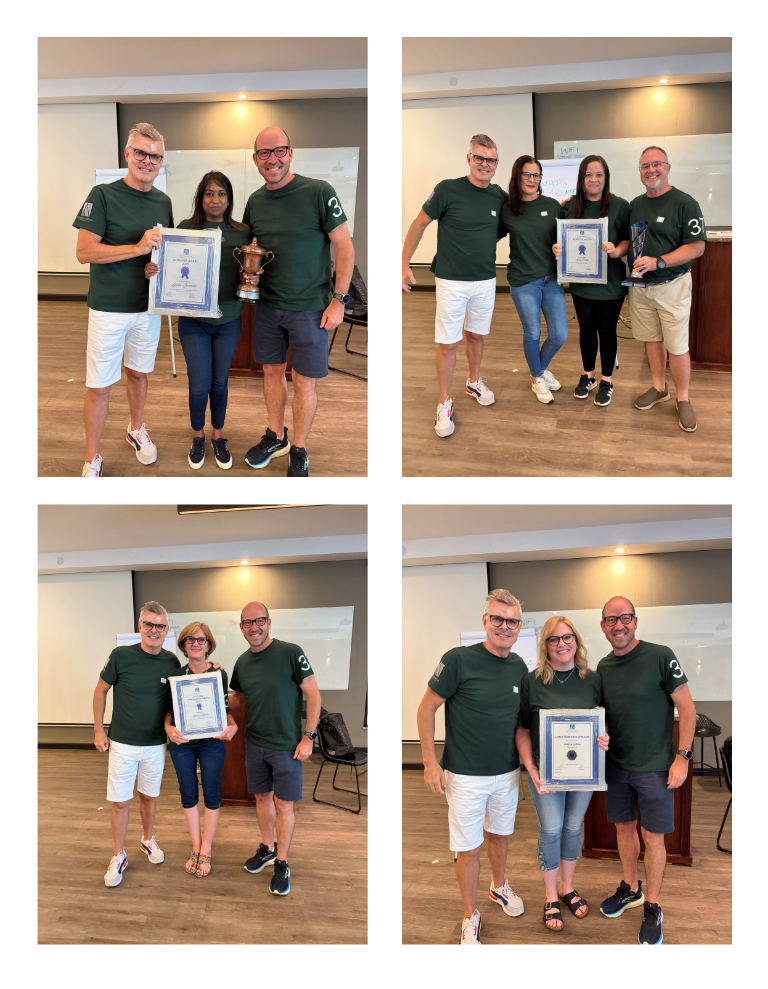
Congratulations to Bonny Panayi on achieving her 5-Year Long Service Award with Jurgens Group
– Presented by Alan Botha and Mark Jurgens.
Quote of the Day
As people and Financial Advisors, we can't change the inevitable. But we can play on the thing we do have and that's our attitude.
- Don Connelly